

Animals and Plants to Watch Out for on the Trail
From spring through fall, animals become more active, and various plants flourish.
We have received reports from various locations along the Michinoku Coastal Trail regarding the following animals and plants that require caution. Please exercise extreme caution when walking the trail.
Also, please be sure to carry items such as a poison remover that can be used for first aid.
Animals
Asiatic Black Bear
Carry items that make noise, such as bear bells or a radio, to alert bears to your presence and avoid encounters.
Bears are said to be most active in the early morning and evening, so avoid walking during these times as much as possible.
Be sure to take home any items that might attract bears, such as food waste or leftovers.
If you see a cub, a mother bear is likely nearby, so do not approach under any circumstances. Be especially careful in early spring!
*Ministry of the Environment pamphlet, “Living in a Rich Forest: Coexisting with Bears”
https://www.env.go.jp/nature/choju/docs/docs5/docs5-kuma.pdf
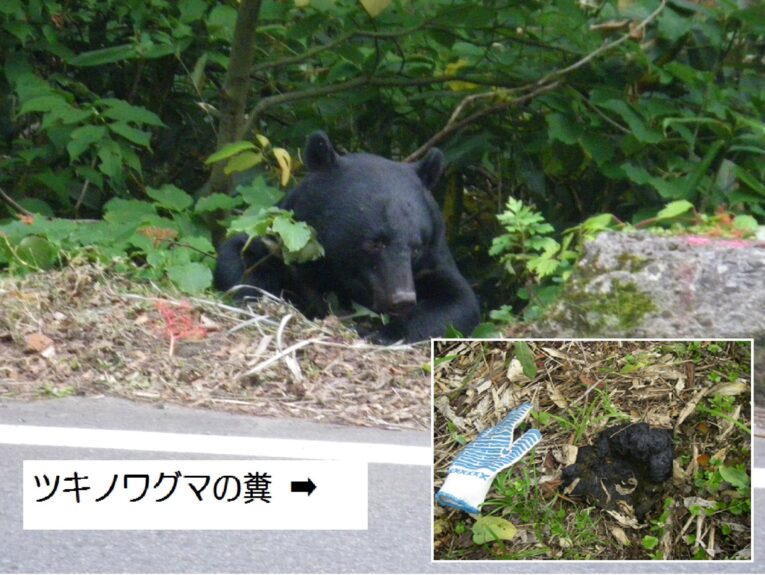
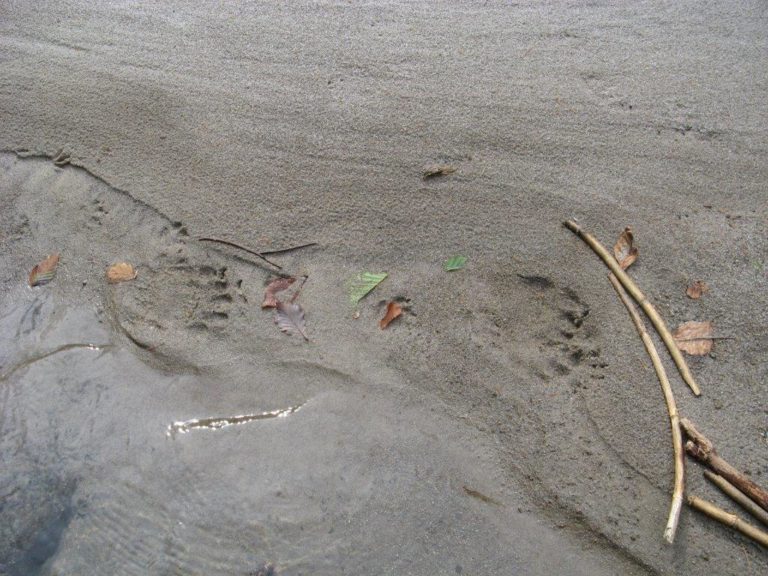
↓Bear tracks
Wild Boar
When outdoors, take adequate precautions—such as carrying a bell or a radio—and if you encounter a wild boar, quietly move away from the area. Do not attack or threaten the animal. Also, if you see a baby wild boar, do not approach it.
If you absolutely cannot avoid coming into close proximity with a wild boar, please take shelter in a safe place, such as an area where the boar cannot easily climb.
Kitakami City, Iwate Prefecture Website
Precautions to Take When Encountering Wild Boars
Michinoku Trail Club
What You Should Know Before You Set Out — Wild Boars —
Snake
Don’t poke it with a stick or anything; just wait for it to go away.
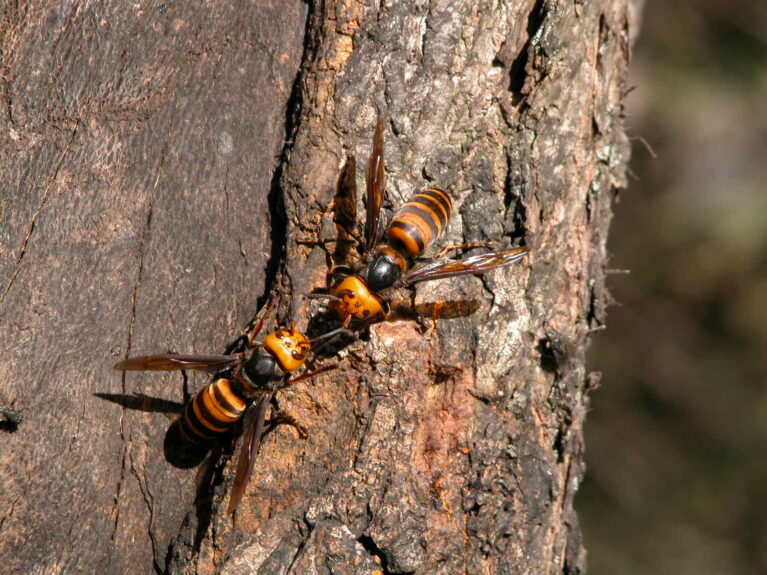
Bee
If you happen to see one, be careful not to disturb it.
Ticks
To prevent ticks from attaching to you, wear long sleeves and long pants, and use insect repellent.
Check your clothes, shoes, backpack, and other items to make sure there are no ticks on them.
Leech
To prevent ticks from attaching to your skin, be sure to wear long sleeves and long pants.
To keep leeches away, alcohol, peppermint oil, and insect repellents specifically designed for mountain leeches are also effective.
Plants
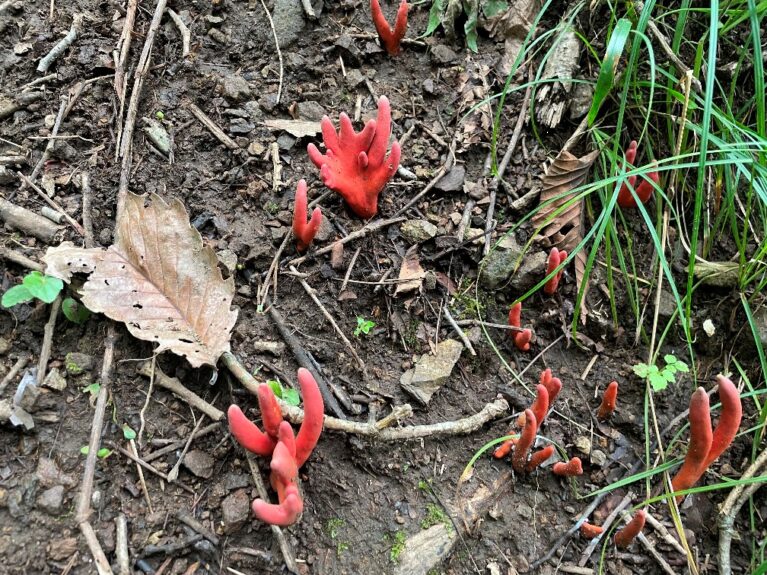
Kaentake
A deep red mushroom that looks as if its fingers are emerging from the soil. It closely resembles the Red-spored Axe Mushroom and the Red-spored Senko Mushroom, which are commonly found in grassy areas, but this Fire Mushroom is highly toxic and dangerous even to touch, so if you see one, stay calm and under no circumstances approach it.
In addition to the Kaentake mushroom, various poisonous mushrooms also grow along the trail. Since they are extremely difficult to identify, be sure never to touch them (as the saying goes, “Better safe than sorry”).
>>>Types of Poisonous Mushrooms | Mushroom Encyclopedia (Japan Mushroom Center, a general incorporated foundation)
For information on other plants to watch out for, please check the Active Ranger Diary [Tohoku Region].