
Leave No Trace

Leave No Trace (LNT) is a global set of guidelines designed to help people enjoy nature while minimizing their impact on the environment.
A little consideration from each and every hiker will help preserve the rich natural environment and the unique character of the Michinoku region for the next 50 years, 100 years, and far into the future.Let’s keep the seven principles in mind so that both local residents and hikers can enjoy their time here comfortably.
Principle 1Advance Planning and Preparation
Proper planning and preparation by groups and individuals not only prevent accidents and injuries but also minimize damage to the environment and cultural properties. On the Michinoku Coastal Trail, we recommend preparing maps and data books in advance to create a safe and comfortable hiking plan. This also allows you to enjoy a sense of accomplishment from your journey and fosters a desire to learn more about the environment.
Principle 2Conduct Activities in Areas with Minimal Impact
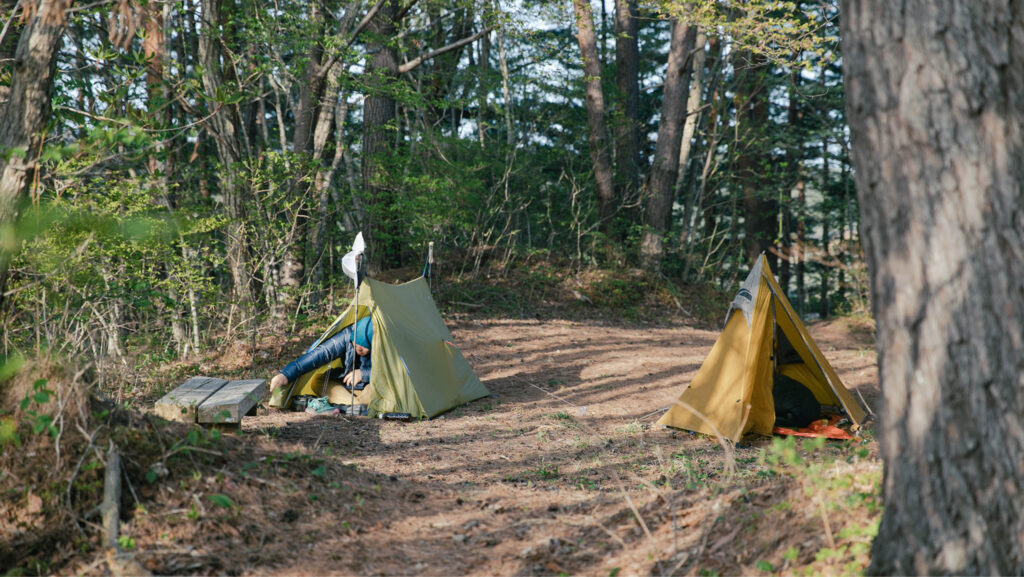
It is very important to understand the impact that nature-based activities have on the environment. When people trample the vegetation and wildlife on the ground, it exceeds nature’s capacity for recovery.To prevent soil exposure and trail erosion, and to avoid damaging the soil and water resources, please choose to hike and camp on well-trodden paths or in areas with minimal impact.
Principle 3Proper Waste Disposal
The rule is “Take everything you bring with you back home.” Take all trash—including food scraps—with you, and clean the area thoroughly before you leave.Learn the proper methods for disposing of urine and feces, and discharge wastewater at least 60 meters away from water sources (when discharging into a stream, be mindful of water pollution caused by sunscreen and insect repellent). When using detergent, choose products made from natural ingredients. In areas where bears live, take special care to manage food scraps and odors.”
Principle 4Leave Things As You Find Them
Even if you find beautiful rocks, plants, seashells, or historical and cultural artifacts, please leave them where they are and share the experience with other hikers. Do not make any alterations to the campsite, such as digging holes, and be sure to return any branches or rocks you’ve moved to their original positions.In national parks and other protected areas, removing natural objects may be illegal. It’s also important to limit yourself to taking photos or making sketches so as not to damage living trees or flowers. (Local residents harvest wild mountain vegetables with consideration for their regrowth in subsequent years; we must exercise careful judgment when doing the same.)
Principle 5Minimizing the Impact of Campfires
Campfires are appealing, but improper use can damage the ground and consume large amounts of firewood. Today, there are lightweight, compact stoves available that have a very low environmental impact. When using open flames, be sure to choose designated areas and take steps to minimize the impact on the environment.
Principle 6Respect for Wild Animals
Please maintain a safe distance from wildlife and observe it quietly. Getting too close can cause stress to the animals and may even result in an attack. Chasing, touching, or feeding wildlife is strictly prohibited. Approaching in large groups, making sudden movements, or making loud noises causes severe stress to the animals. Please split into small groups when observing.
*As an exception, when encountering bears, make moderate noise (such as ringing a bear bell) as you move to alert them to your presence.
Principle 7Consideration for Other Visitors
Let’s all be considerate of one another so that everyone can equally enjoy the sounds of nature, the breeze, and the scenery as it is. Let’s avoid excessive noise and crowds, and be considerate of others—such as by yielding when passing—to create an atmosphere where everyone can have a pleasant outdoor experience.