

Trail Maintenance in Collaboration with CCC: Kamaishi City—Kuwadai Pass, Part 1
Starting in September 2025, the California Conservation Corps (CCC) came to Japan to collaborate on maintenance work along the Michinoku Coastal Trail.
https://mct-a.org/activity/10447/
In this post, I’ll be providing a detailed report on “Kamaishi City: Kuwadai Pass, Part 1,” based on our collaborative trail maintenance effort with CCC.
Overview
Date and Time: Thursday, September 18, 2025 – Friday, September 19, 2025(Fri)
Location: Kuwadai Pass, Kamaishi City
Organizers: Ofunato Regional Strategy (General Incorporated Association), Michinoku Trail Club (NPO)
Participants: CCC, Kamaishi City, Ofunato Regional Administration Office, local interpreters, Michinoku Trail Club
Details:
Day 1: Trail Survey
Day 2: Trail Maintenance
Challenges on the Trail
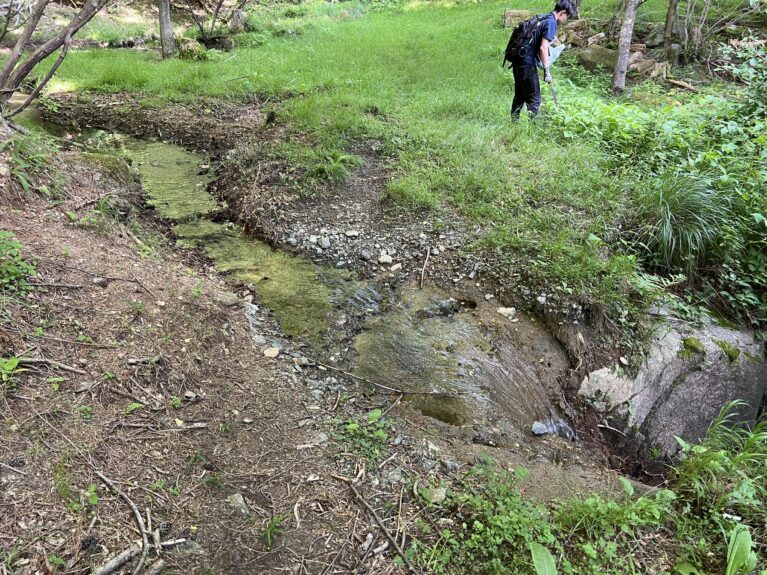
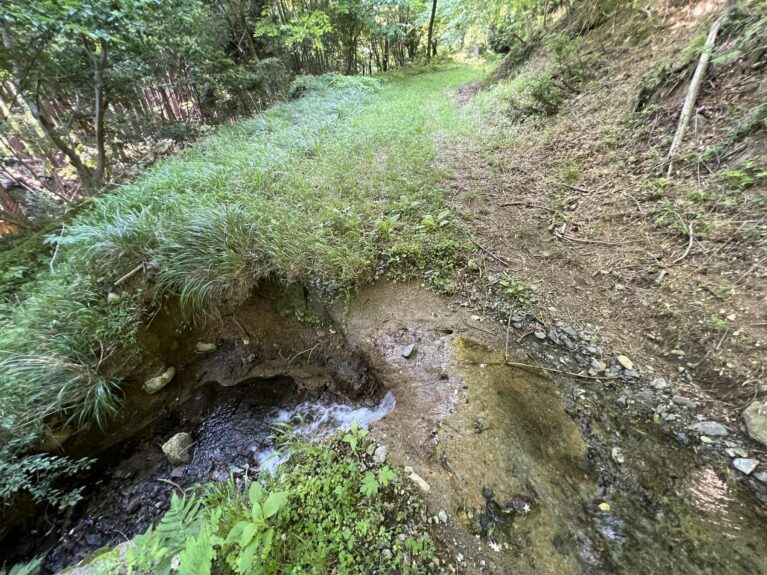
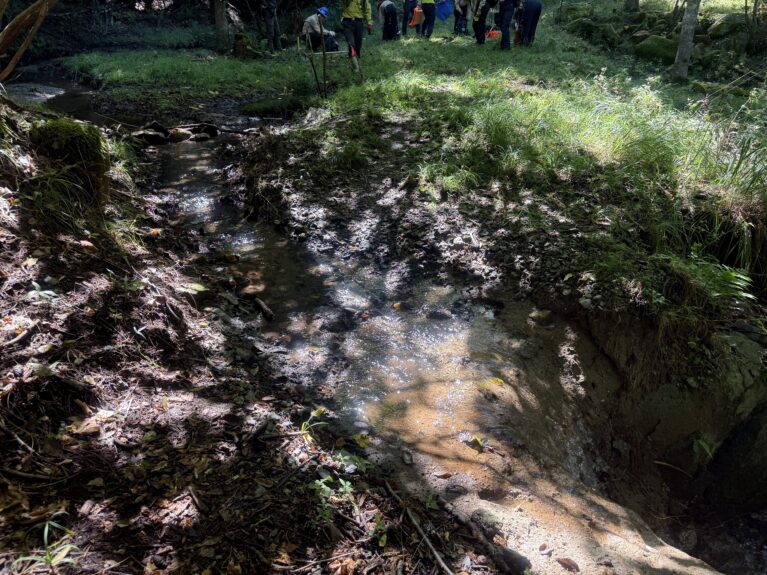
At this point, a stream flows into the trail, cutting it off.
Not only was the water flow quite heavy—with water spilling onto the trail—but a major landslide was also observed.
Causes of the Problem
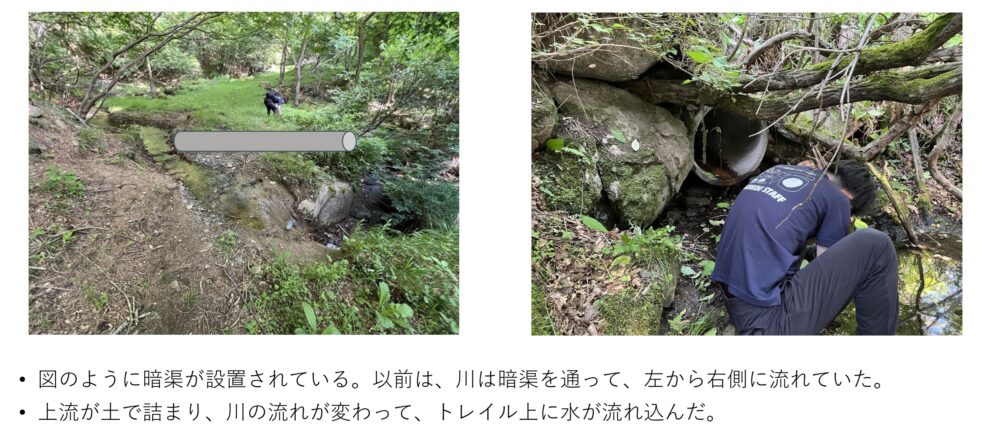
Upon surveying the surrounding area, we discovered a culvert like the one shown in the photo in the stream on the right side of the trail. Further investigation revealed that the culvert was originally installed as shown in the diagram below, and that water used to flow from left to right through it. It is believed that a blockage upstream of the culvert caused the river’s flow to change, resulting in water flowing onto the trail.
Maintenance Plan
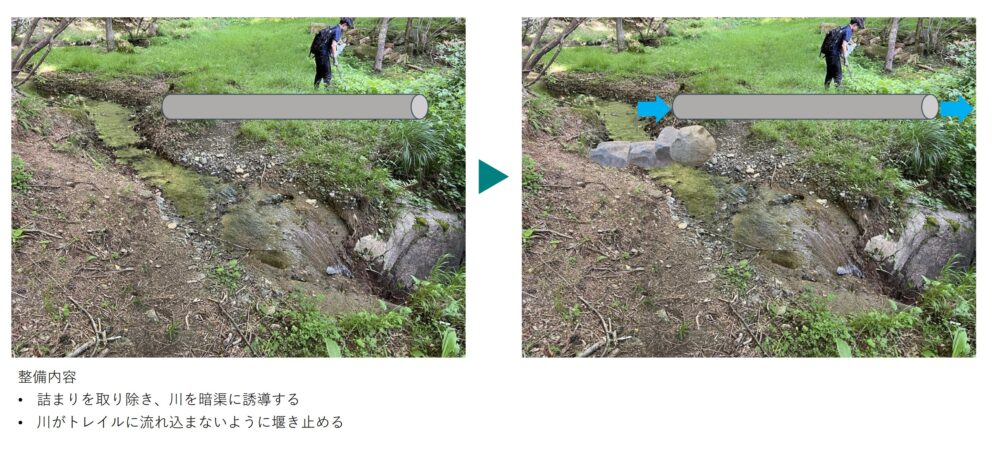
We will remove the blockage and divert the stream into a culvert. At the same time, we will build a dam to prevent the stream from flowing into the trail.
Maintenance Work
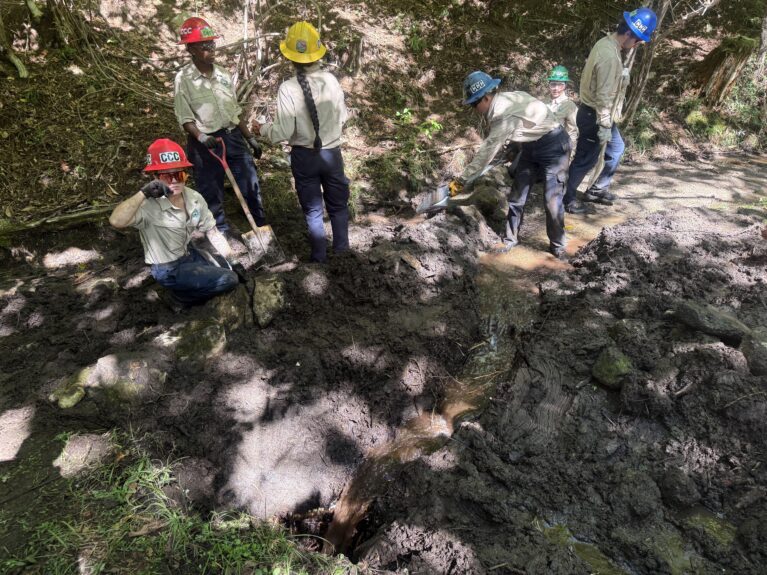
First, I located the entrance to the culvert.
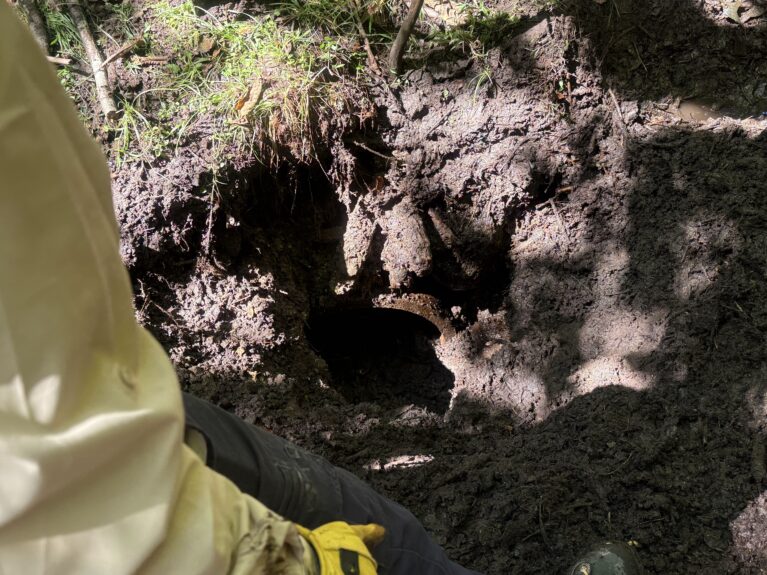
To prevent the culvert from becoming clogged with mud again, dig a hole deeper than waist height and ensure that the culvert’s entrance is properly secured.
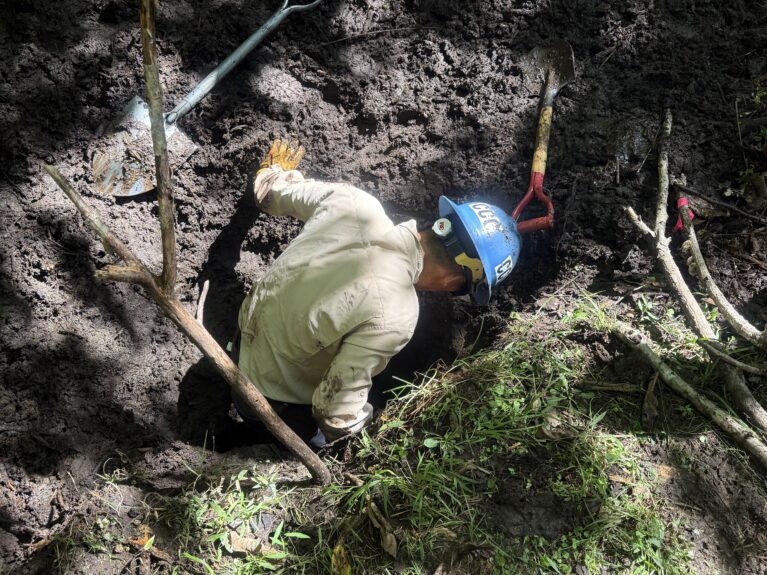
Next, while checking the direction of the water flow, we’ll consider the best route to guide it.
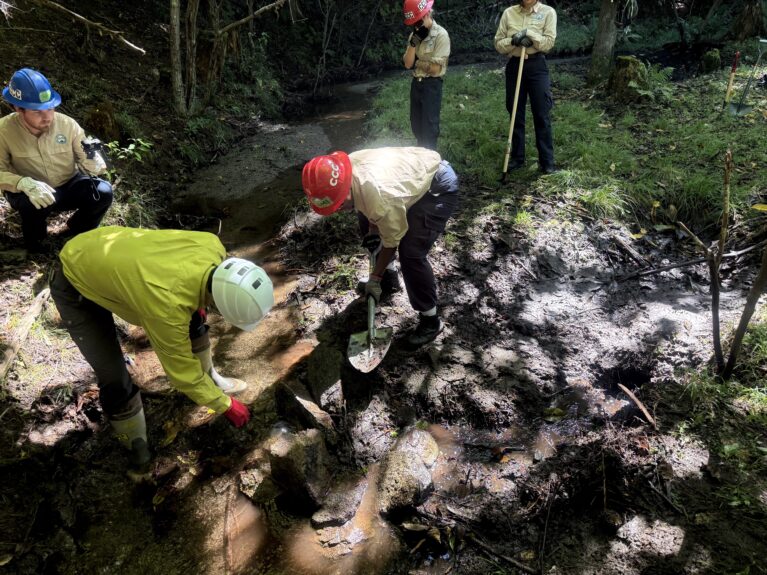
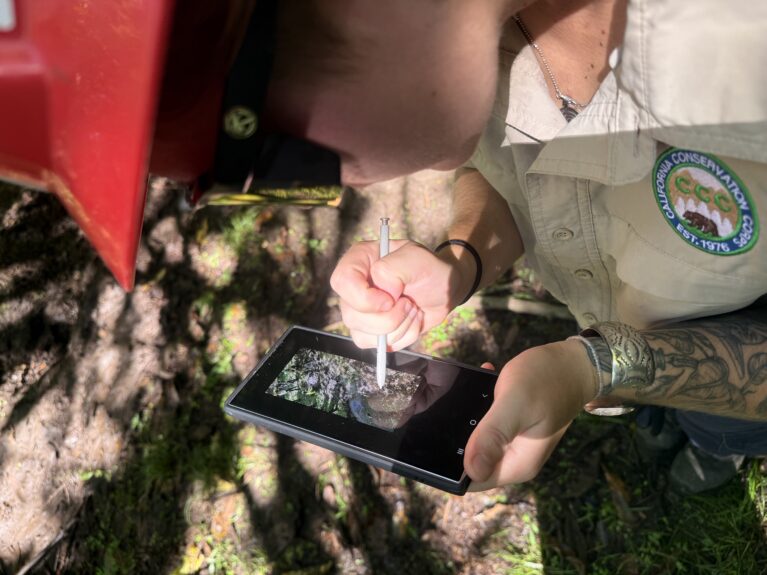
We will dam the river with rocks and divert the flow into a culvert.
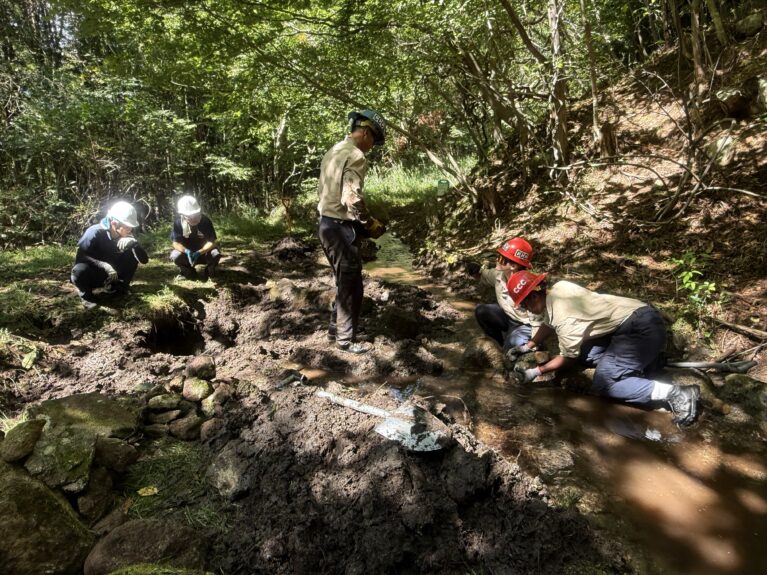
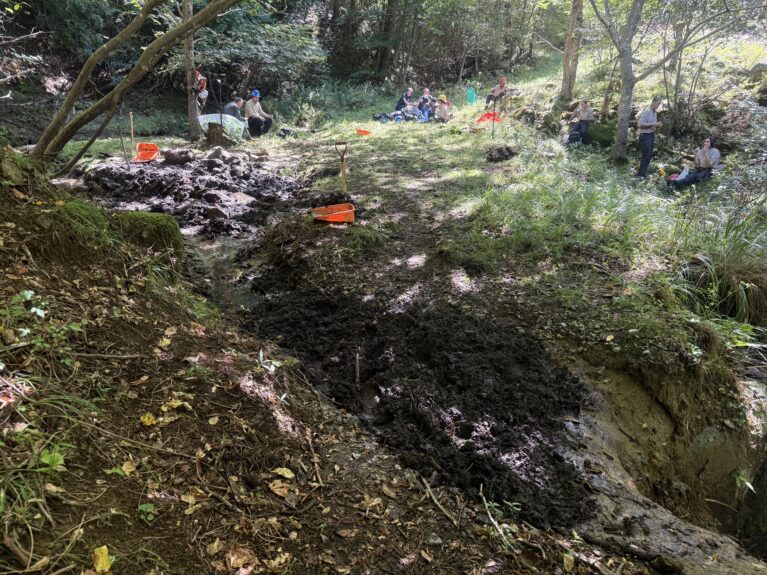
Where the stream re-entered the culvert, we built an embankment out of soil on top of the rock dam we had already constructed. As a result of this work, almost no water flows onto the trail anymore.
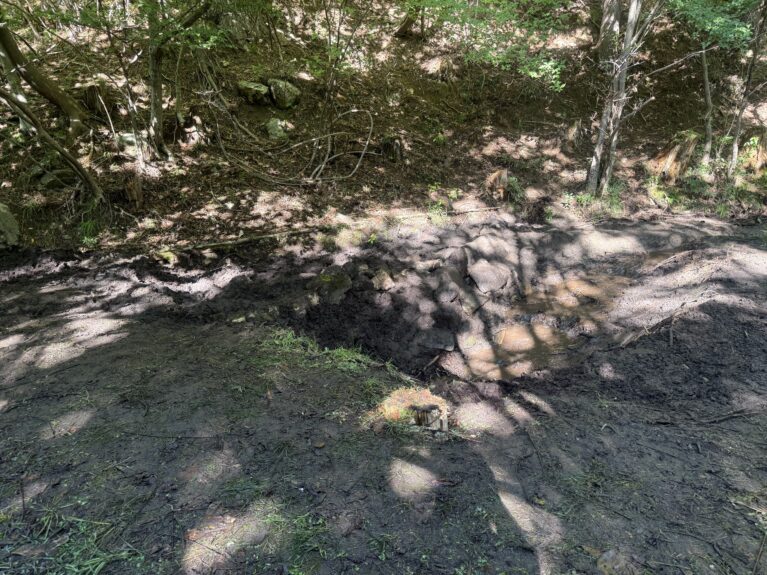
By laying branches over the “muddy patches” that form on the trail after the river recedes, we can prevent the muddy patches from spreading.
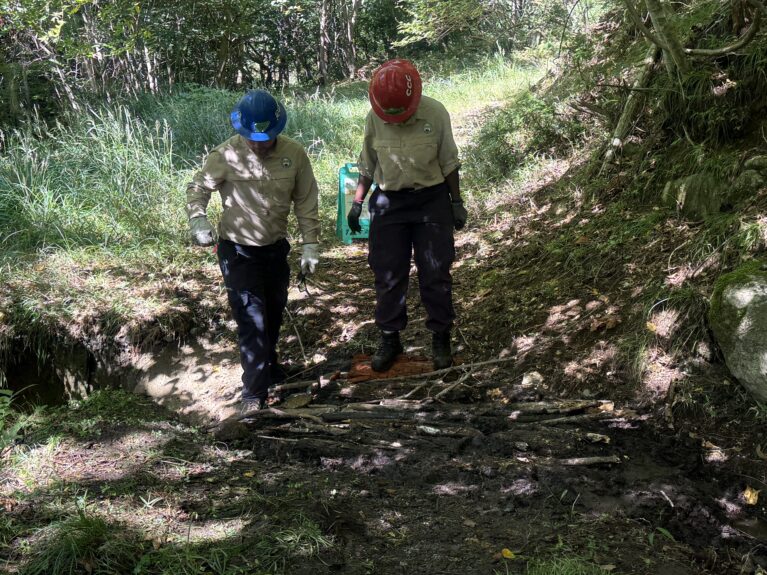
Before → After
Summary
The force of the water is truly powerful, so it’s entirely possible that sediment will be washed away again, causing the culvert to clog and water to flow onto the trail. We plan to monitor the situation regularly, perform maintenance as needed, and keep a close eye on it.
Article by: Ryota Matsukawa