
This is Itaya from the Michinoku Trail Club.
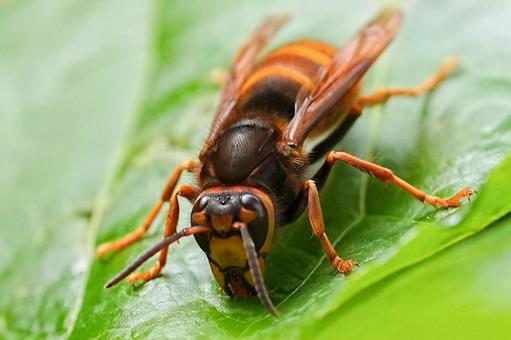
The dangerous creature I’m featuring this time is the hornet—the one that scared me the most, in my opinion.
A few summers ago, I had a very frightening experience in the mountains of Hokkaido when I was chased by a hornet that kept circling me relentlessly at an altitude of about 500 meters.
Fortunately, I wasn’t stung, but I was chased for an unbelievably long time and over an incredibly long distance, and by the end, I was running while holding back tears, fully prepared to be stung.
In this article, we’ll be introducing the hornet—a frightening creature that lives right in our midst.
Habits of Hornets
■There are 17 species of hornets in Japan, and they are generally highly aggressive.
There are more deaths from hornet stings than from bear attacks or venomous snake bites, with 30 to 40 people dying each year.
■The active season is from May to October. Stings are most common from August to September, when the number of worker bees peaks and they are most actively protecting the hive for the next generation.
■Although there are slight differences depending on the species, they typically build their nests under the eaves of houses, on tree branches, in the ground, near tree roots, or inside tree hollows.
■They usually move and patrol within a 10-meter radius of their nest. When they spot an intruder, they fly around the area and engage in threatening behavior to chase the intruder away.
How to Avoid Being Attacked by Hornets
■They fly around, keeping a watchful eye on anyone who approaches the nest. Usually, they circle the area once or twice; if they detect no threat, they fly away.
Occasionally, they may hover right in front of you to assess the situation. If you startle them by swatting at them or waving your arms wildly at this moment, the hornets will go on the offensive.
Since they react to sudden movements and loud noises, it’s best not to run or make a commotion; instead, keep a low profile and move away from the area.
■ They also react to smells. When entering mountains or forests, it’s best to avoid using items with strong scents—such as perfume, cosmetics, detergent, fabric softener, and hair products—as much as possible. Also, when hornets are nearby, be careful of sweet smells like juice or gum.
■They react to dark-colored objects. One theory suggests this is because their natural predator, the bear, is black, but it is unclear whether this is true.
It seems safer to avoid dark-colored clothing and wear light-colored or white clothing instead. For the same reason, it’s advisable to wear a hat to cover black hair.
Additionally, to minimize damage in the event of a sting, it’s best to wear clothing that covers as much skin as possible, such as long pants and long sleeves.
■ They may also be building nests under the eaves of outdoor gazebos or beneath benches and tables. Before taking a break, be sure to carefully observe your surroundings to check for any hornets flying around.
Looking back on it now, I realize that when I was chased in Hokkaido, I had unwittingly created several conditions that made it almost inevitable that I would be attacked by a hornet.
・Dark-colored clothing
I’m pretty sure I was wearing a navy blue hat and a navy blue T-shirt at the time. As for the backpack I was carrying, I thought it was green, but looking at it again, the outer pocket was black, and almost all of the exterior was black. Overall, I was a rather dark-clad guy.
・Agitated movements
I was running desperately, trying to get as far away as possible. I thought I was keeping my posture low, but my movements may have been quite agitated.
・Loud noise
I didn’t scream, but since I was running so frantically, the bear bell attached to my backpack was ringing loudly. It’s possible that the loud noise agitated the hornets.
A dark-skinned middle-aged man running frantically, crouching slightly low and ringing a bear bell loudly.
I’m really glad I didn’t get stung. Maybe it would have stung my backpack or something.
If You Get Stung by a Hornet
First Aid
■ Rinse the wound under running water while applying pressure to it. If you have a poison extractor, use it to draw out the poison.
Never suck the poison out with your mouth. If you have a cut or sore in your mouth, the poison will enter your body through it.
■Application of an antihistamine ointment.
■Cooling.
*Apparently, the idea that ammonia works is nothing but a myth. When I was a kid, I used to proudly tell people that if you got stung by a bee, you should pee on the spot—I’m so embarrassed now.
Anaphylactic Shock
When stung by a bee, depending on your body’s reaction, you may experience “systemic allergic symptoms.”
These can include swelling or hives in areas other than the sting site, and in severe cases, life-threatening symptoms such as difficulty breathing or loss of consciousness.
In the worst-case scenario, it can even be fatal. This is the terrifying condition known as anaphylactic shock.
If you experience symptoms of anaphylactic shock—such as shortness of breath, dry mouth, cold sweats, dizziness, low blood pressure, numbness, vomiting, or hives—seek medical attention at an emergency room immediately.
However, since anaphylactic shock is an allergic reaction, whether or not it occurs varies from person to person, and it does not necessarily mean that it will occur just because it is the second time.
First and foremost, it’s important to stay calm and handle the situation appropriately.
Reference Sites:
・Urban Hornets:
・Association for the Prevention of Occupational Accidents in the Forestry and Wood Products Industries
~~~~~~~~~~~~~~~~~~~~~~~~~~~~~~~~~~~~~~~~~~~~~~~~~~~~~~~~~~~~~~~~~~~~~~~~~~~~~~~~~~~~~~~~~~~~~~~~~~~~~~~~~~~~~~~~~~~~~~~~~~~~~~~~~~~~~~~~~~~~~~~~~~
Although hornets are very frightening, they don’t exist solely to attack humans.
They attack to drive away predators that have invaded their territory—they do so to ensure their own survival. In fact, they also serve as beneficial insects, hunting pests that damage crops and ornamental plants to feed their larvae.
With the right preparation and proper response, we can prevent unfortunate accidents from occurring in the first place.
It is now August, which is said to be the time of year when hornets are at their most aggressive. We ask all hikers on the Michinoku Coastal Trail to be mindful of the four key factors—”color, scent, movement, and sound”—to avoid being stung by hornets and ending up in a dangerous situation, so that you can enjoy your hike safely.
HAPPY TRAILS!
-1-768x543.png)