
This is Itaya from the Michinoku Trail Club.
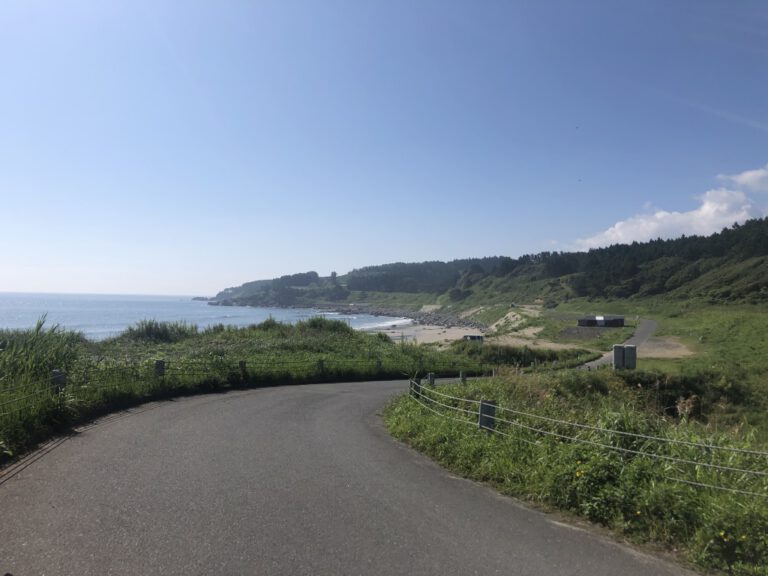
We sometimes receive questions like, “Can you hike the Michinoku Coastal Trail even in winter?” When people think of hiking trails in Tohoku during winter, they may worry that it’s incredibly cold, that the snow is too deep to walk through, or that they’ll need mountaineering gear. However, along the Pacific coast where the Michinoku Coastal Trail (MCT) runs, conditions aren’t usually that harsh. While some caution is necessary, I believe the trail is generally walkable.
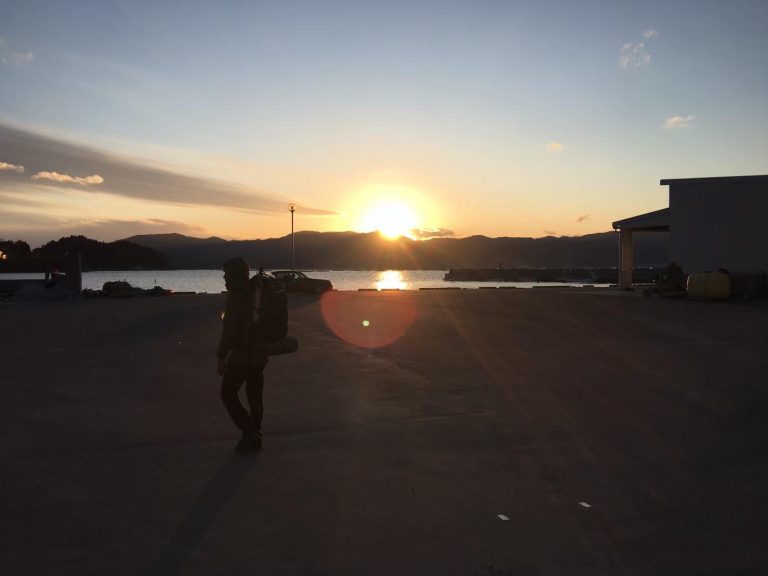
I myself hiked the MCT as a through-hike during the winter from late November 2019 through January 2020.Although I had originally planned an autumn through-hike, I was forced to postpone my departure due to a typhoon that struck in the fall and caused significant damage; however, hiking in the crisp, cold winter air turned out to be a truly wonderful journey.
Drawing on that experience, I’d like to share some random thoughts on the MCT in winter—including its highlights (based on my personal impressions), things to watch out for, winter temperatures, and clothing and gear.
I hope this serves as a helpful hint for anyone planning their own trip.
Please keep in mind, however, that weather conditions vary from year to year and from one moment to the next, so please exercise caution.
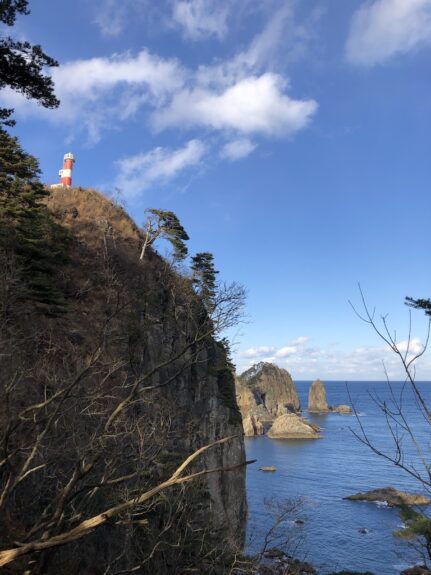
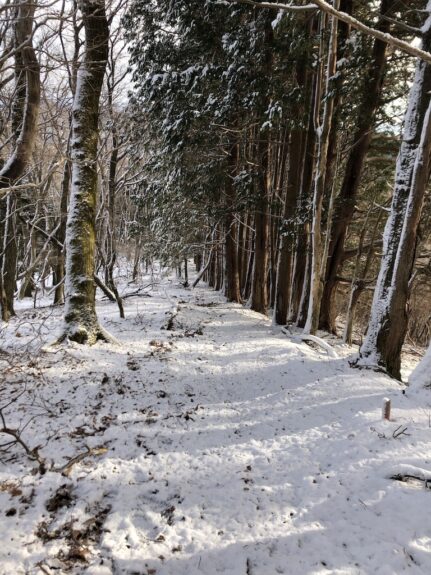
Highlights I’d Like to Recommend
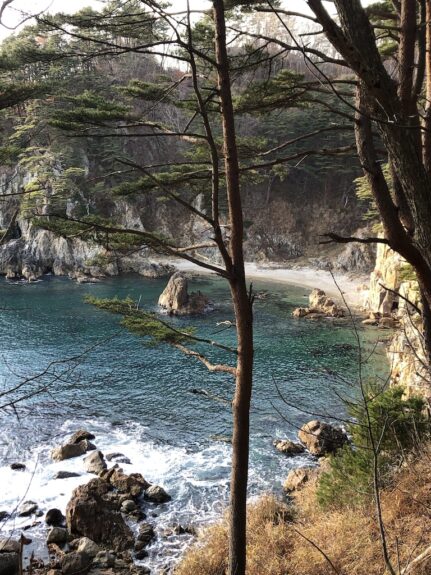
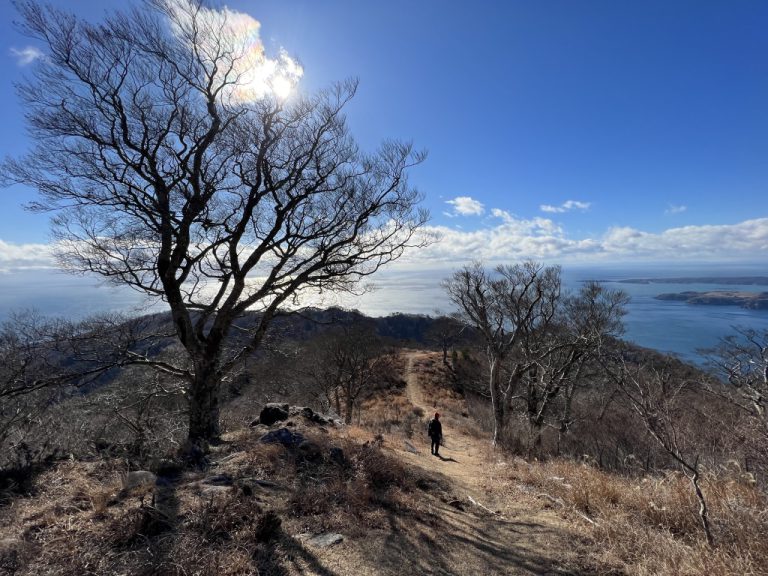
◯ The broadleaf trees have shed their leaves, offering better views.
◯ The air is crisp, offering better views.
◯ You won’t get worn out by the heat. In fact, it’s easier to walk when the temperature is lower.
◯You can see the stars beautifully at night.
◯Insects such as mosquitoes, spiders, bees, and leeches are not very active.
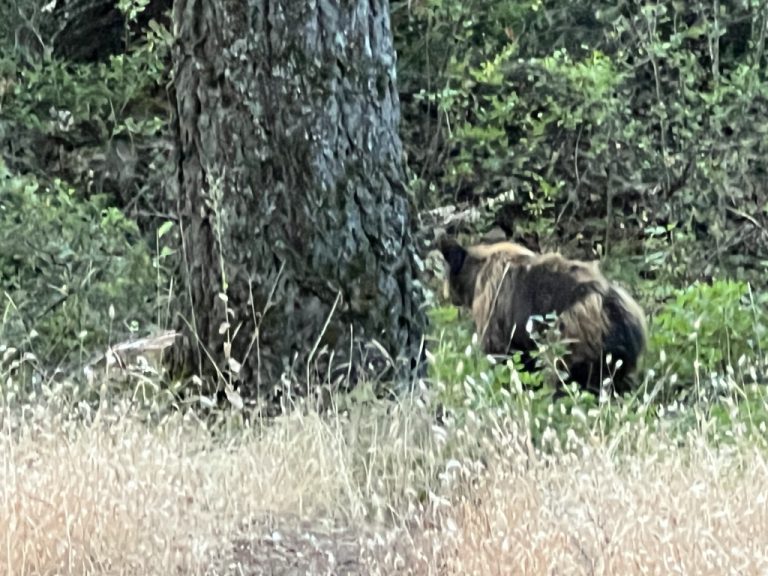
△Local residents say that Asian black bears and Sanriku bears do not hibernate, so you must remain vigilant.
Points to Keep in Mind
▶Since temperatures are low, be careful of hypothermia if you get wet in the rain.
▶If you walk while wearing too many layers just because it’s cold, you may actually get too hot, leading to exhaustion or getting chilled from sweating.
▶Watch out for icy roads. Be sure to check the temperature to help prevent this.
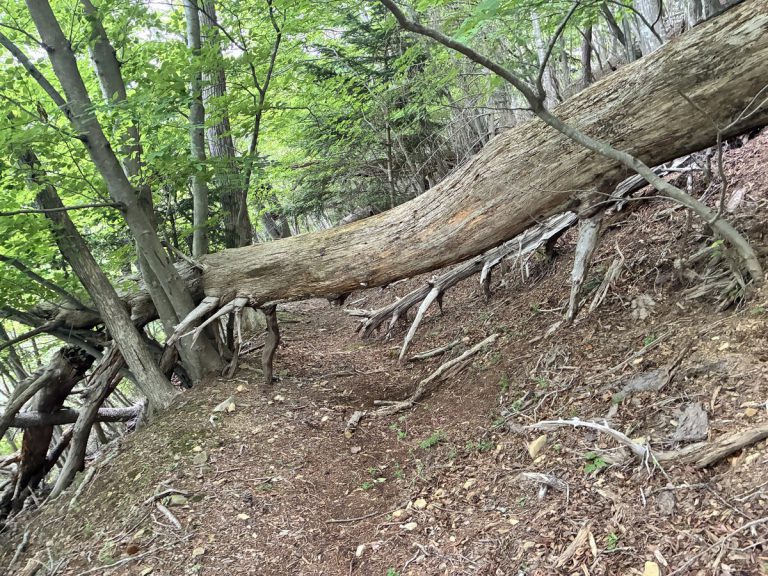
▶Although the mountains along the trail are relatively low, caution is needed as the summits of Mount Kakamigatake, Mount Kasumirogatake, Mount Kujirayama, Mount Tasukayama, and Mount Ishinage may have snow on them.
▶When hiking in the northern areas or on nature trails, there is a possibility of icy or snow-covered surfaces, so it’s a good idea to bring simple anti-slip gear, such as chain spikes, just in case.
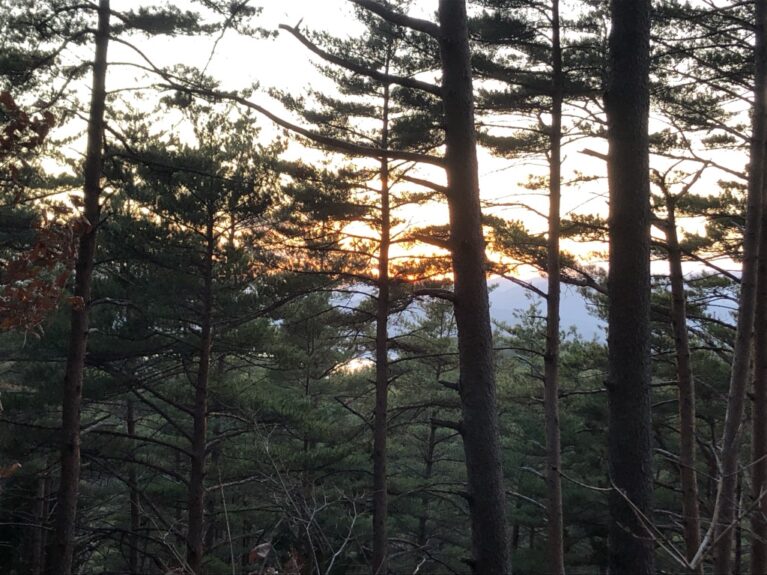
▶Plan your schedule taking into account the early sunset times.
▶Carry a headlamp, reflectors, and other safety gear in case you’re out after sunset.
▶Campgrounds are often closed during the winter, so be sure to check in advance.
(The Natori Trail Center Campground is open except during the New Year’s holiday period and on Tuesdays, which are closed.)
▶Be aware that public restrooms and water fountains are often unavailable.
▶The Amajishima Line, which connects Tashirojima and Amajishima, may have schedule changes, so please check in advance.
▶The free ferry between Katsurajima and Nonoshima in the Urado Islands does not operate on Sundays and holidays from November through March.
▶The MCT-exclusive route between Kanazawa Island in the Urado Islands and Miyato in Higashimatsushima City is suspended from November through March.
▶Since cell phone batteries drain faster in cold weather, be sure to carry a portable charger.
While you can generally walk around—and it’s actually a surprisingly easy time of year to do so—there are some winter-specific precautions to keep in mind, so please keep these in mind to ensure you have a safe and enjoyable experience.
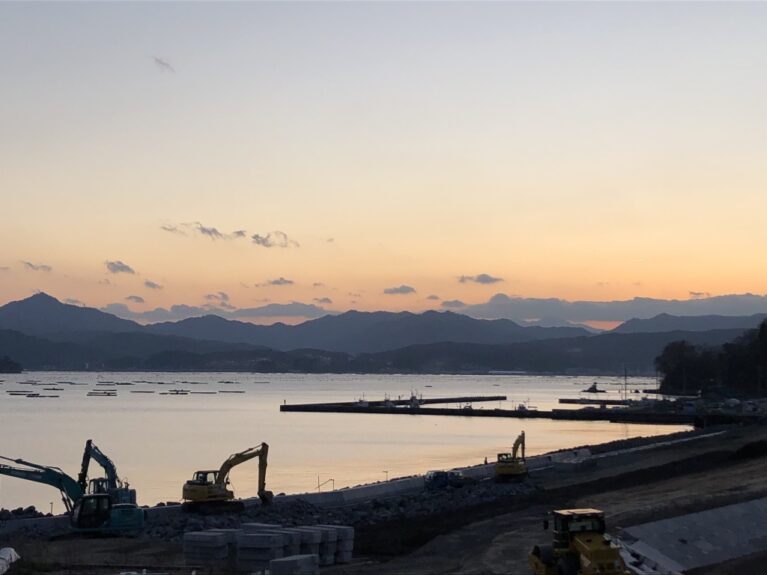
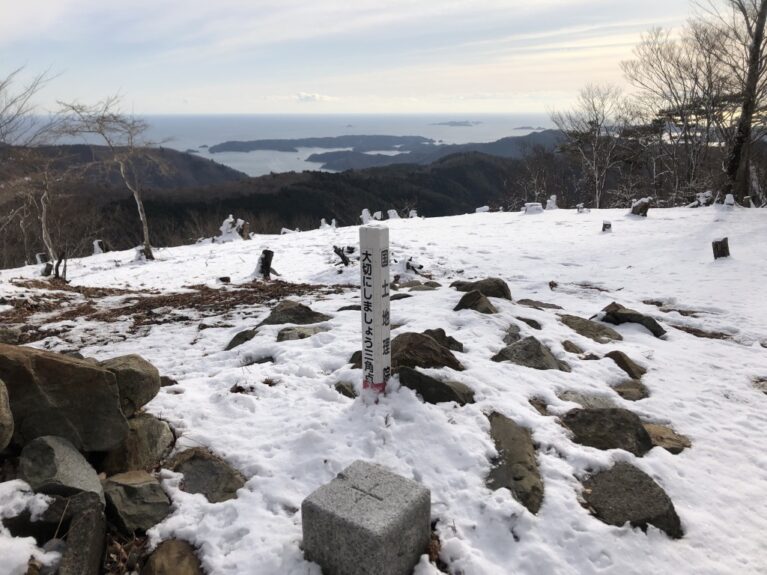
About Temperature
To get a sense of what the actual temperatures are like, we compared them across various locations using the average high and low temperatures from last winter (December 2022–February 2023) as an example.
| December | January | February | ||
| Hachinohe City | Average High Temperature | 4.9°C | 2.4°C | 3.4°C |
| Average Low Temperature | -1.7°C | -3.9°C | -3.4°C | |
| Miyako City | Average High Temperature | 7.3°C | 5.0°C | 6.0°C |
| Average Low Temperature | -1.7°C | -3.7°C | -3.7°C | |
| Ofunato City | Average High Temperature | 6.8°C | 6.5°C | 6.4°C |
| Average Low Temperature | -0.6°C | -2.7°C | -2.4°C | |
| Ishinomaki City | Average High Temperature | 7.0°C | 4.9°C | 6.5°C |
| Average Low Temperature | -0.6°C | -2.7°C | -2.4°C | |
| Natori City | Average High Temperature | 8.3°C | 6.5°C | 7.7°C |
| Average Low Temperature | -0.6°C | -2.7°C | -2.4°C | |
| Tokyo | Average High Temperature | 12.2°C | 10.2°C | 12.1°C |
| Average Low Temperature | 3.7°C | 1.8°C | 3.0°C | |
| Osaka | Average High Temperature | 11.6°C | 10.3°C | 11.0°C |
| Average Low Temperature | 4.6°C | 3.1°C | 3.7°C | |
| Morioka | Average High Temperature | 3.6°C | 2.1°C | 3.7°C |
| Average Low Temperature | -2.8°C | -4.6°C | -4.8°C |
You can view historical data on the Japan Meteorological Agency’s website, so please take a look if you’re interested.
“Japan Meteorological Agency Website”
These are merely average values. Also, since the measurement locations are not necessarily along the coastal areas where the MCT passes, please treat these figures as a general guide. Looking at these figures, you can see that the temperatures differ significantly from those in Tokyo and Osaka. Even so, it seems to be slightly warmer than in the inland city of Morioka.
Not only during the winter, but also in March and April, please check the low temperatures in your specific area using the regional weather forecast before heading out, and plan your clothing and gear (such as sleeping bags) accordingly.
As a side note, it’s said that when you go hiking, it’s a good idea to bring a thermometer—even a small one will do. This is because you can record the temperature while hiking or at bedtime, and use that information as a reference for future trips—for example, “At this temperature, I should wear this gear.” I highly recommend giving it a try.
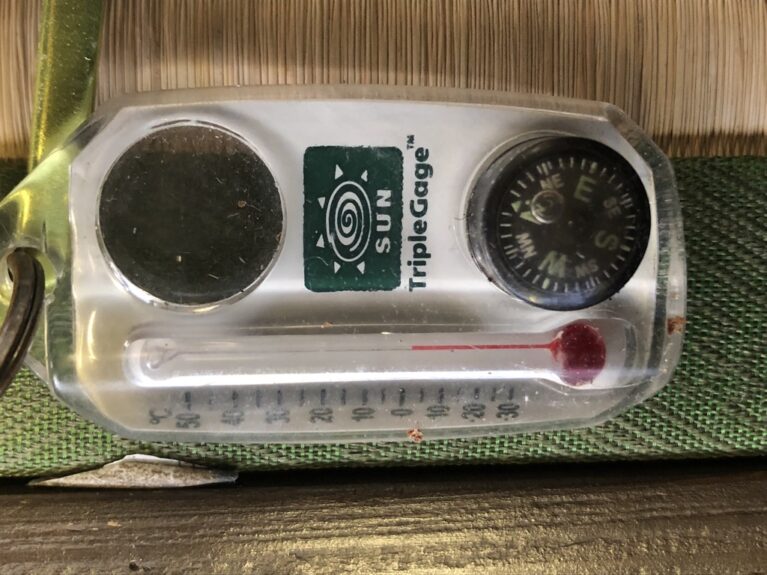
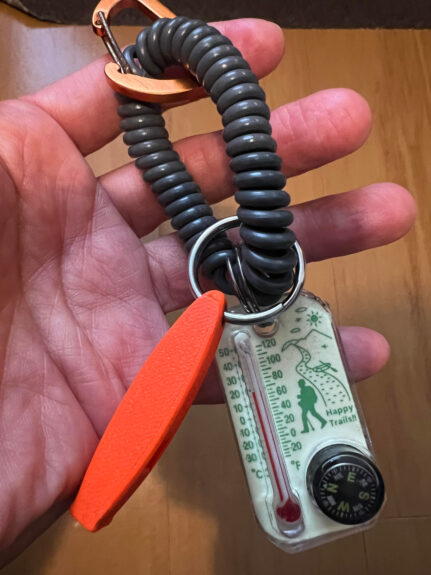
As mentioned in the precautions, while snowfall and snow accumulation are generally light along the Tohoku Pacific coast, there is a possibility of snow accumulation in mountainous areas. Additionally, roads may be icy, so we recommend carrying simple snow spikes or similar gear as a precaution when hiking in mountainous sections or in the northern regions.
Snowfall and snow accumulation can occur even in March. Extra caution is required, especially when walking on nature trails in the northern region, so please check the weather forecast before planning your route.
About the Clothing
| Category | Manufacturer | Product Name | Weight (g) |
| WEAR | 2941 | ||
| Outerwear (Winter) | Patagonia | Nano Puff Jacket | 300 |
| Outerwear (Softshell) | Teton Bros. | Long Trail Hoodie | 391 |
| Mid Layer | Patagonia | Fleece Vest | 267 |
| Mid Layer | Mountains and Trails | Merino Hoodie | 262 |
| Underwear | icebreaker | Long-Sleeve T-Shirt | 136 |
| Pants | Mountains and Trails | Merino 5-Pocket Pants | 377 |
| Tights | CW-X | Support Tights | 226 |
| Underwear | The North Face | Boxer Shorts | 51 |
| Haramaki | AXESQUIN | Haramaki | 80 |
| Neck Gaiter | Buff | Neck Gaiter | 37 |
| Cap | Highhand2000 | Wool Watch Cap | 94 |
| Socks | Injinji | Midweight Crew Wool | 86 |
| Glove | Outdoor Research | Fleece Gloves | 40 |
| Wristwatch | CASIO | F-91W-1JH (Cheap Casio) | 21 |
| Bandana | Bandana | 39 | |
| Shoes | Altra | Lone Peak 3.5 | 534 |
・My fleece gloves weren’t keeping my fingertips warm, so I stopped at a Workman store along the trail and bought a pair of gloves with Thinsulate insulation.
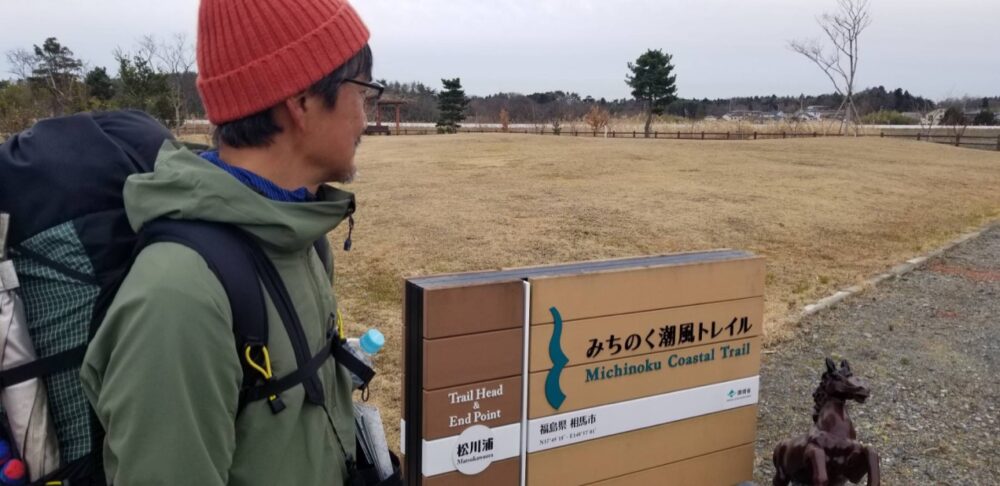
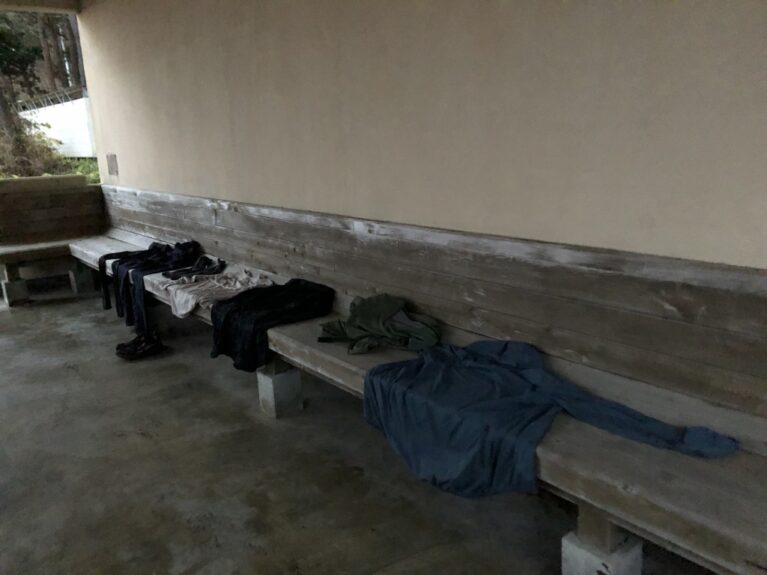
At the start, I was a bit overloaded with layers to protect against the cold, but as I walked along, things settled down into the outfit shown above.
However, as you might expect, temperatures and weather conditions vary from time to time, so please use this as a general example only.
From a weight-saving perspective, I could have just used my rain jacket as my outer layer, but I had bought the Teton Bros. Long Trail Hoodie specifically for this hike and really wanted to wear it, so I brought it along. Deciding what to wear for the MCT through-hike—choosing my gear—was one of the things I looked forward to most.
〈Tips for Layering〉
It was cold when I started walking in the morning, so I wore my Nano Puff jacket for warmth, but once I warmed up from walking, the softshell jacket was the only layer I had on top. If you dress too heavily to stay warm, you’ll end up sweating profusely while you’re active, which drains your energy and can cause you to get chilled from the sweat. I recommend planning your outfit so you can easily add or remove layers to regulate your body temperature.
〈Be Careful When Choosing Underwear〉
Due to reasons such as overheating caused by body heat, slow drying, and a tendency to feel chilled after sweating, we do not recommend wearing heat-generating materials or products like “Heat ◯◯◯” as underwear while active.
My top recommendation is merino wool. The material itself offers excellent insulation; while it doesn’t dry quickly, it retains heat well and stays warm even when wet, and it’s resistant to odors—it has many benefits. I even wear merino wool T-shirts in the summer.
I personally don’t tend to wear cotton—which takes a long time to dry—or polyester—which can draw heat away as it dries—as winter base layers.
About Equipment
| Category | Manufacturer | Product Name | Weight (g) |
| PACK | 835 | ||
| Backpack | ULA | CDT | 650 |
| Backliner | Sea to Summit | Ultra Sil Pack Liner S (50 L) | 73 |
| Shoulder Bag | Mountains and Trails | Yamatomichi Sacohe | 46 |
| Staff Sack | Mountains and Trails | Staff Pack XL | 66 |
| SHELTER & SLEEPING | 1635 | ||
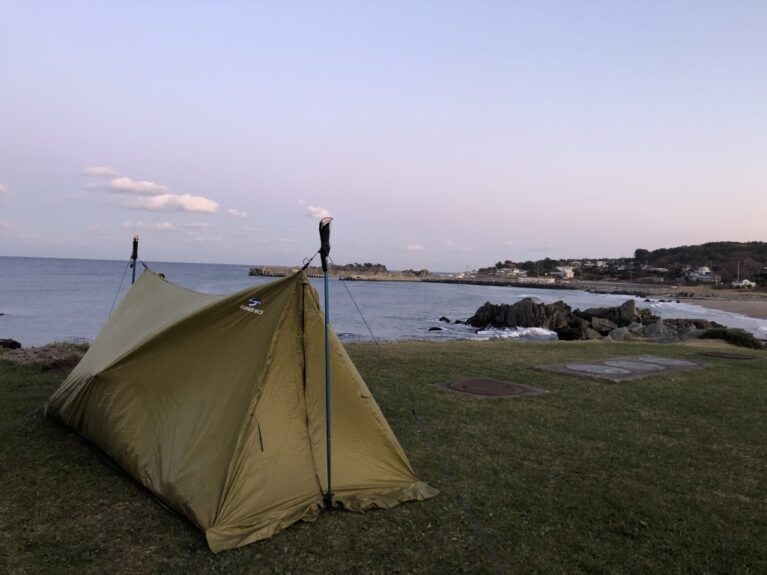
| Tent | finetrack | Zelt 2 Long (with Rope) | 400 |
| peg | Arai Tent | 8 stick pegs | 80 |
| Inner Sheet | SOL | Emergency Blanket | 78 |
| Sleeping Bag | Hiker’s Depot | Winter Down Sleeping Bag | 885 |
| Sleeping Pad | FREELIGHT | Closed-Cell Mat | 132 |
| Cushion | THERMAREST | Z-Sheet Sol | 60 |
| COOKING | 684 | ||
| Stove | Primus | 116 Femto Stove II | 64 |
| Gas Cartridge | Primus | High-Power Gas 250T | 380 |
| Cooker | If you have | Pound Cup | 80 |
| Cutlery | snowpeak | Skuu | 14 |
| Cup | WILD | Folding Cup | 24 |
| Writer | Bic | Mini Bic | 10 |
| Water Carrier | Platypus | Platy 2L Bottle | 36 |
| Water Carrier | Platypus | Soft Bottle, 1 L | 35 |
| Water Purifier | Sawyer | Mini SP128 | 41 |
| WEAR (Clothes, etc.) | 1220 | ||
| Rainwear | Patagonia | M-10 | 233 |
| Rain Pants | finetrack | Everbreath Photon Pants | 220 |
| Outerwear | Teton Bros. | Wind River Hoodie | 95 |
| Underwear | Brown by 2Tacks | BAA3 (Wool Long-Sleeve T-Shirt) | 255 |
| Underwear | Smartwool | Wool Tights | 121 |
| Socks | Smartwool | Wool Socks | 95 |
| Down Pants | The North Face | Lightweight Thermal Pants (for wearing in tents and lodgings) | 201 |
| OTHERS | 2091 | ||
| Sun umbrella | EuroSHIRM | Swing Liteflex Umbrella | 218 |
| Trekking Poles | SINANO | Trail Running Poles | 388 |
| Headlamp | PETZL | TIKA | 86 |
| Light | CARRY THE SUN | Small Warm Light | 63 |
| Spare Battery | 3 AA batteries | 36 | |
| Cell Phone | Apple | iPhone 8 | 148 |
| Power Bank with Power Outlet | ANKER | PowerCore Fusion 5000 | 189 |
| Portable Charger | ANKER | PowerCore III 5000 | 110 |
| Code | Lightning Cable | 27 | |
| First Aid Kit | Something I put together myself | 65 | |
| Toothbrush | Soladey | Solade Toothbrush | 22 |
| Knife | Victorinox | Classic SD | 21 |
| Shovel | MIZO | Mog (includes toilet set) | 44 |
| Tenugui | PAPERSKY | Shizuoka Tenugui | 36 |
| Toilet Paper | 2 packs of tissues | 40 | |
| Trash Bags | mont-bell | Garbage Bag | 58 |
| Thermometer | Sun & Hiker’s Depot | Therm-O-compass | 9 |
| Compass | SILVA | No. 7 | 22 |
| Map | Ministry of the Environment | Official Maps (5 sheets) | 200 |
| Lightweight Crampons | GRIVEL | Spider | 183 |
| Sunglasses | FLOAT | MAIA MAT.BLACK/Lt.GY FMR | 27 |
| Reading Glasses | JINS | Reading Glasses | 21 |
| Ballpoint pen | BIC | 4-Color Ballpoint Pen | 11 |
| Bear Bell | EX’PERT OF JAPAN | Mini Bell | 9 |
| Whistle | Whistle | 6 | |
| Staff Sack | GRANITE GEAR | Air Bag (11L) × 2 | 52 |
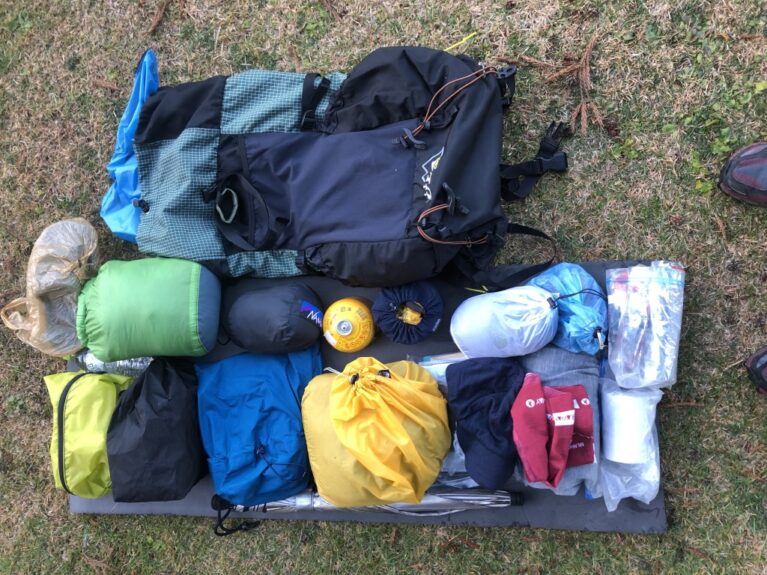
Total: 6,465 g
〈The Gas Cartridge Issue〉
While this isn’t limited to winter hiking, I think one of the concerns when doing a through-hike is the issue of restocking fuel.
As of February 1, 2024, the gear shop “TRAIL GATE” inside the Natori Trail Center carries various gas cartridges (OD cans). (They also carry fuel alcohol.) Hikers entering the MCT from Sendai Airport should definitely stop by.
You can also look for home improvement stores or outdoor shops in towns along the trail to purchase them.
*The following businesses—Yanagisawa Shoten in Hachinohe, Shiga Sports and EFRICA in Miyako, and MESA in Kamaishi—are registered as MCT Supporters and carry OD cans.
Personally, before my MCT hike, I considered a gas stove compatible with CB canisters—which are available at convenience stores—but ultimately decided against it because it would have added to my overall weight, and I wasn’t sure if I could purchase just a single canister. Instead, I carried an OD canister gas stove.
〈Sleeping Bag〉
The winter of 2019, when I was hiking, was a mild one, so even though it was cold, I was able to complete a through-hike while mostly camping in a tent. That said, it is still the northern region, after all.
I started out with a three-season sleeping bag and would sleep wearing a down jacket, down pants, and down socks, but it was still cold, and I found myself dreading the arrival of night.I realized that if things continued this way, it would become mentally difficult to keep up the through-hike! Deciding that I had no other choice, I splurged on a winter sleeping bag and put it to use.
Even though the store clerk asked if it might be overkill, from then on I was able to sleep nice and warm in just a T-shirt and tights, and I was so happy to spend my nights in such comfort.
“Winter Down Bag”
Hikers planning through-hikes in the spring and fall should not let their guard down when it comes to the cold. If possible, it’s best to choose a sleeping bag rated one level higher than the minimum comfort temperature of 0°C.
Alternatively, we recommend considering items that can provide extra warmth, such as inner liners, sleeping bag liners, or Vivi.
You can restock on daily necessities at least once every three days at stores or in town, and you can even purchase gear from online shops and have it delivered to a pickup location. I think it’s fine if you don’t have everything perfectly set up from the start—you can figure out what you need and what you don’t as you go along. Isn’t that part of the fun?And to a hardcore UL hiker, my gear probably includes some unnecessary items.
Ultimately, it’s a matter of personal preference. Aside from essential items, I don’t think there’s a right or wrong way to do it.
“HIKE YOUR OWN HIKE” starts right from the moment you choose your gear.
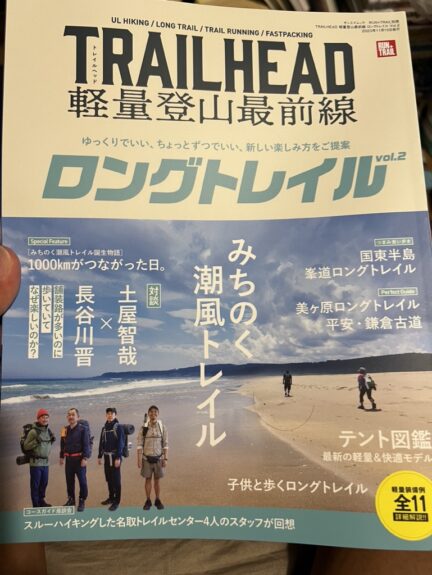
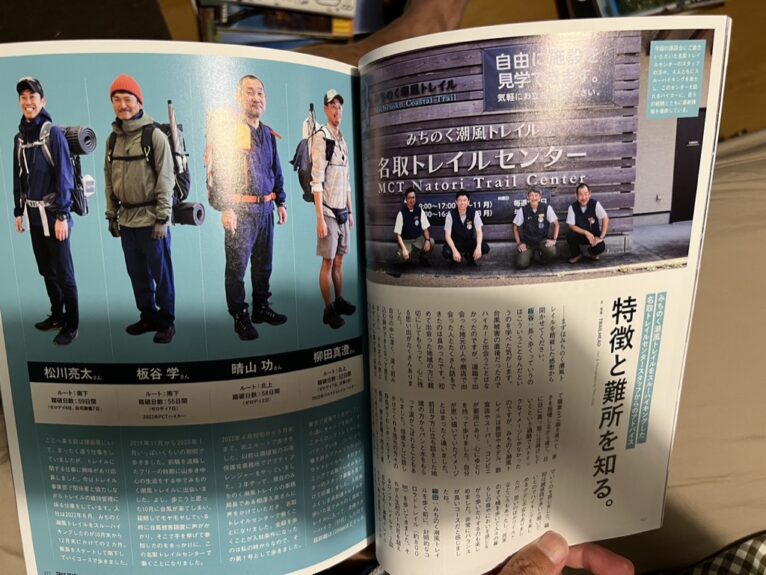
As for gear, the October 2023 issue of “TRAILHEAD Long Trail Vol. 2” features the through-hiking gear of four staff members from the Natori Trail Center, so please check it out if you’re interested.
*This book is available in the Natori Trail Center’s library section. It is also for sale at TRAIL GATE.
※※※※※※※※※※※※※※※※※※※※※※※※※※※※※※※※※※※※※※※※※※※※
That concludes our tips on winter hiking. We hope these will help you enjoy your MCT hikes safely.
If you have any questions, please feel free to contact the Natori Trail Center.
Well then, HAPPY TRAILS!!
-1-768x543.png)