
It’s now mid-October, and it’s the perfect season for hiking.
I’d like to share a few points that I hope all hikers heading out will keep in mind.
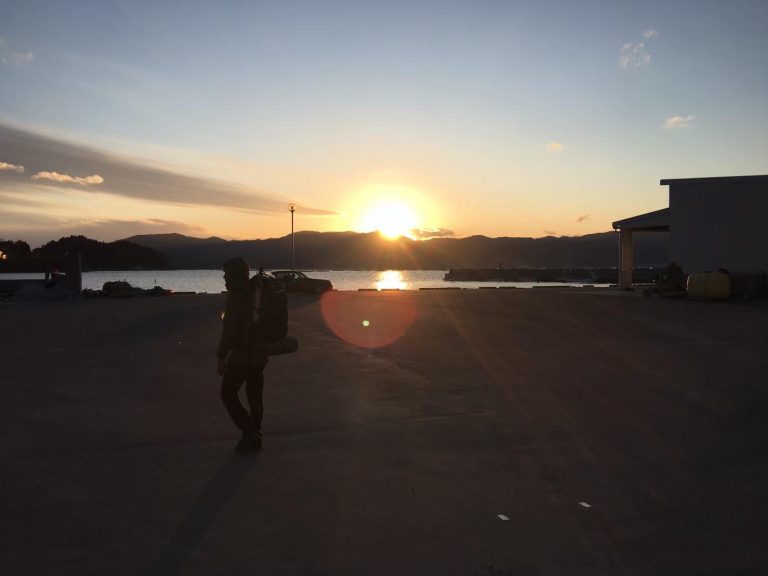
Be mindful of sunset times
The sun is setting earlier and earlier.
For reference, let’s take a look at the sunset times on October 15 in Osaka, Tokyo, and various locations in the Tohoku region (along the Michinoku Coastal Trail):
- Osaka: 5:24 p.m.
- Tokyo: 5:06 p.m.
- Hachinohe: 4:55 p.m.
- Miyako: 4:54 p.m.
- Sendai: 5:00 p.m.
As you can see, the times differ in various places.
If you live west of the Tohoku Sanriku coastline, where the Michinoku Coastal Trail runs, your perception of sunset times may differ, so we recommend checking the times when planning your trip.
Please be aware that the days will gradually get shorter from now until the winter solstice.
For example, there are websites where you can calculate sunrise and sunset times, so please check them out.
When Making a Plan
When hiking, it’s often said that you should arrive at a mountain hut by 3:00 p.m.
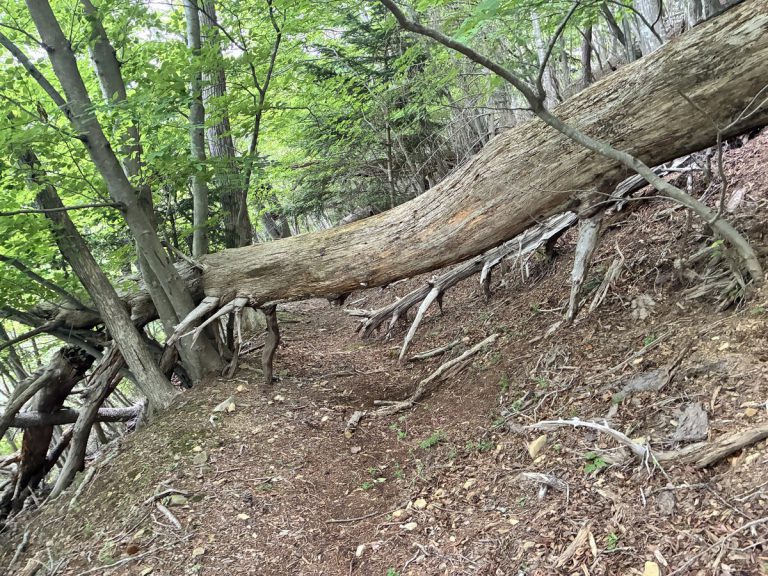
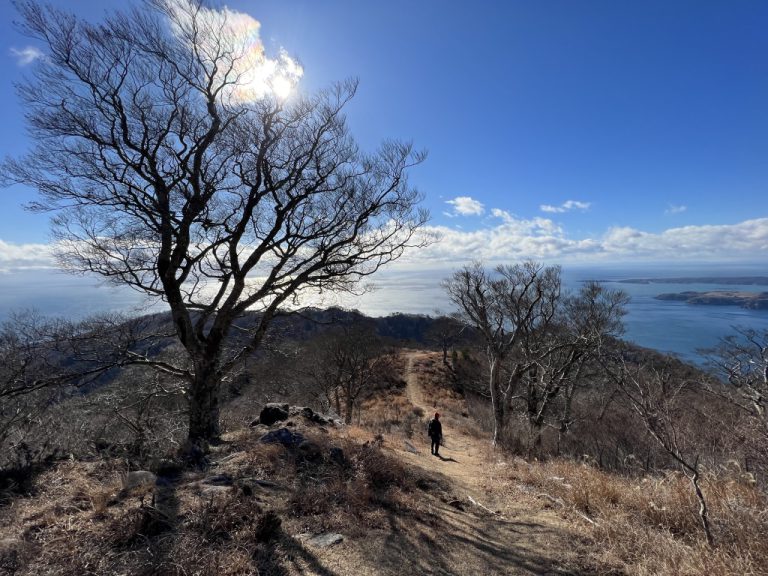
While this may not be strictly necessary for hikes on the Michinoku Coastal Trail, if you’re walking in areas that involve mountain climbing or have many nature trails, we recommend planning your schedule so that you’re back on paved roads at least 30 minutes before sunset.
You’ll start to feel rushed as sunset approaches, and dark mountain trails carry risks such as getting lost or falling. It’s safer to plan ahead and start early.
Also, when making your plans, be sure to look closely at the contour lines on the map.
I think a good rule of thumb is that it takes about an hour to walk 4 km, but when the terrain is hilly, it’s common to cover only about 1.5 km in an hour.
I’d like you to look at the map, check those points, and make your plans accordingly.
What to Bring
Lighting fixtures, such as headlights
If, for any reason, you are unable to finish that day’s hike as scheduled, you will need a flashlight, regardless of whether you are on a mountain trail, a nature trail, or a paved road.
Headlamps that leave both hands free are convenient, but be sure to carry a light source—even a flashlight will do.
Also, when you have to walk on paved roads after dark, reflective strips and the like are useful for making your presence known to drivers.
Rainwear
On the Michinoku Coastal Trail, you’ll often find yourself walking with an umbrella even when it rains, so you may not have many opportunities to wear rain gear.
However, on mountain trails and nature trails with steep ascents and descents, rain gear may be more effective in certain situations.Since rain can cause your body temperature to drop, potentially leading to hypothermia, we recommend carrying rain gear as part of your hiking gear when venturing into such areas.
Winter Clothing
Even if it’s warm enough to make you break a sweat during the day, the temperature can drop suddenly.
As the season changes, please consider adding a warm layer to your wardrobe.
Cell Phone Charger
Even if you end up being out and about for a long time, it’s reassuring to have a charger with you.
A battery with a capacity of around 5,000 mAh can fully charge a variety of smartphones once.
[NEW!!] Updated December 12, 2025
Regarding cell phone chargers (power banks), given the performance of today’s smartphones, a battery with a capacity of around 5,000 mAh will typically charge your device to about 60%. Please select a power bank that matches the battery capacity of your smartphone.
That concludes our tips for the upcoming hiking season.
While it’s important to keep your gear light so you can move easily, we ask that you carry the necessary items as you would for mountain hiking, especially when walking on mountain trails and nature trails.
-1-768x543.png)