
For a Safe Hike on the Michinoku Coastal Trail
— Watch Out for Hazardous Trees (Fallen Trees, Overhanging Branches, and Falling Branches) —
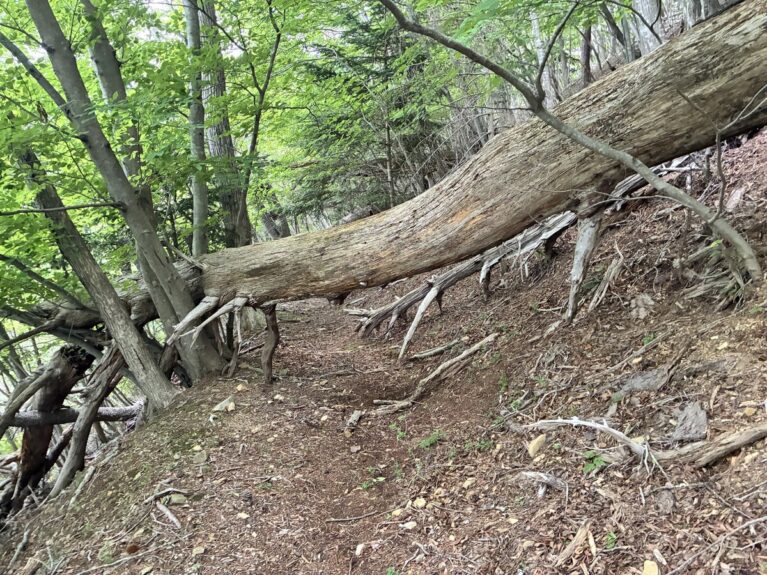
In recent years, along the Michinoku Coastal Trail, the number of hazardous trees—including fallen trees, trees leaning over the trail, and fallen branches—has been increasing due to typhoons, heavy rain, and oak wilt. Since these can lead to serious accidents while hiking, caution is advised.
We’ll outline key points for enjoying a safe hike, covering both the planning stage and the hike itself. We’ll also explain what to do if you encounter a hazardous tree.
Things to Keep in Mind When Planning a Hike
Please avoid hiking in the mountains during inclement weather.
During or immediately after severe weather conditions—such as typhoons, heavy rain, strong winds, or heavy snowfall—the risk of falling trees and branches increases significantly. Please check weather forecasts and warnings, and avoid entering the mountains if conditions are unsafe.
Check the latest trail information
Before setting out, be sure to check for road closures and hazardous areas along each section of the trail. Please check the official Michinoku Trail Club website and other sources for the latest information.
Be Aware of the Risk of Fallen Trees Due to Oak Wilt
Trees that have died due to oak wilt are more likely to fall during strong winds. When walking in areas with many dead trees, avoid doing so on windy days.
Gather Your Gear
It’s a good idea to make sure you have emergency communication tools on hand, such as a cell phone or a whistle.
Precautions for Hiking
Always be aware of your surroundings
On windy days or in areas with dense trees, sounds like “creaking” or “cracking” can sometimes be a sign that a tree or branch is about to fall. Listen carefully and be alert to sounds and movements around you.
Check above your head
Especially along ridges and forest roads, dead or unstable branches may fall. When taking a break or stopping, be sure to check the condition of the trees overhead.
Identifying Dangerous Trees
Trees with leaning trunks, large cracks or hollows in the trunk or at the base, or mushrooms growing on them are considered hazardous trees that are prone to falling due to advanced decay.
If possible, travel in a group.
In the event of an accident, rescue efforts may be delayed, so if possible, travel in groups. Be sure to check in with each other regularly within your group.
If You Encounter a Dangerous Tree
Move to a safe place immediately
If fallen branches or fallen trees are present, or if you see signs of them, leave the area and move to a place sheltered from the wind or an open area.
Don’t crawl under the leaning tree
If a fallen tree is blocking the trail, it is dangerous to try to squeeze underneath it. The tree may be unstable and could shift, or it might fall on you from above. Take a safe detour, or if you cannot proceed, turn back.
Make a calm judgment
It’s also important to know when to turn back rather than forcing your way through. In the wilderness, having the courage to turn back is the best way to stay safe.
In Closing
The Michinoku Coastal Trail is a path where you can feel the connection between the sea, the forest, and people, but nature is constantly changing. Let’s walk while keeping in mind the importance of properly understanding the risks posed by hazardous trees, not pushing ourselves too hard, and enjoying the trail safely.
Reference Materials
-1-768x543.png)